
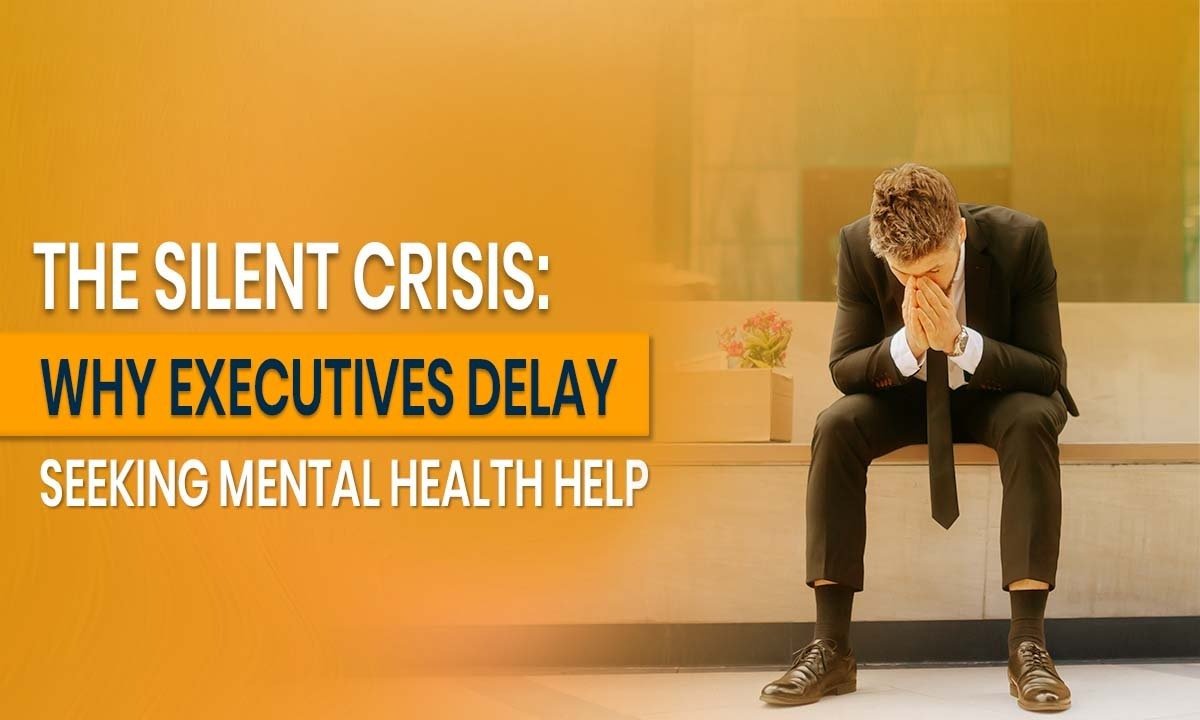
In the high-stakes world of corporate leadership, mental health help often takes a backseat to the pressures of decision-making, long hours, and the constant demands of high-performance environments. Executives, who are expected to lead with authority, often hesitate to address their mental health concerns, resulting in what can only be described as a silent crisis. This article explores why executives delay seeking mental health help, the challenges they face, and how organizations can provide better mental health support in high-pressure jobs.
The Stigma Around Mental Health in Leadership Roles
One of the primary reasons executives avoid seeking mental health help is the stigma surrounding mental health in leadership positions. There is a prevailing belief that top-tier professionals should always remain composed and in control, which makes it difficult for many to admit that they need assistance. The fear of appearing weak, vulnerable, or incapable of handling the stress of their roles prevents many leaders from addressing their emotional well-being.
Executives often worry that seeking mental health support will negatively impact their career trajectory. This belief is rooted in a misconception that mental health issues are a sign of failure, particularly in leadership roles that demand strength, resilience, and decisiveness. In truth, acknowledging and addressing mental health challenges can actually enhance an executive’s performance by improving focus, productivity, and overall well-being.
The Toll of the High-Pressure Jobs on Mental Health.
One of the reasons why executives take a long to seek mental health assistance is due to high-pressure jobs. The stress of leading a business, achieving targets every quarter and being available 24/7 can have a devastating effect on the mental and emotional state of a person. The heavier the load of these duties, the higher the chance of experiencing burnout, anxiety and depression.
Stress turns into an inseparable companion of many executives. Work-life balance is a toxic one due to long working hours, every decision-making, and the necessity to present a successful image to people. It is easy to forget about personal well-being and concentrate on professional success in such an environment. But mental health issues that come up as a result of long-term stress may eventually impact on the performance at work, interpersonal relationships and even body health.
Why Mental Health Awareness is Crucial for Executives
The need to create awareness of mental health in organizations particularly at the executive level is on the increase. It is important to be aware of stress, burnout, and anxiety signs, as well as to maintain the well-being of leaders. Most executives also receive premium healthcare benefits but most of them do not utilize such benefits because they consider themselves to be self-sufficient or they are not aware of the mental health services that are available.
To counter this, the companies should foster an environment that encourages openness to mental health issues. Organizations can assist executives to overcome the obstacles that hinder them to take care of their mental health by ensuring that pursuing mental health support is viewed as a strength and not a weakness.
Stress Management: An Important Executive Skill.
Stress management is a requisite skill which every executive must learn. Stress is an essential component of being a leader, but the ability of the executives to manage it can be the difference. Mindfulness, meditation, exercise, and setting boundaries are stress management techniques that can greatly decrease how stress affects mental health.
Reflection is a very strong way to deal with stress on a regular basis. It can be most beneficial to devote some time to oneself every day and evaluate the extent to which stress is impacting their mental health. To illustrate, an executive could begin his or her day by taking a brief meditation session or going on a walk during lunch to relax. The practices enable leaders to retreat, re-evaluate and lower chances of burnout.
Real-Life Story: The Strength of Asking Assistance.
A top CEO of a multinational corporation, whom we will refer to as Mr. Sharma, recently confessed to his anxiety and depression issues. Over the years, Mr. Sharma thought that leaving to get mental health assistance would cast a dark cloud over his reputation and that he had to push through it. Only when his mental and physical health started to decline did he get professional assistance. With his therapy and the integration of stress management methods in his life, he was able to regain his health and, in fact, enhance his performance at his job and even become a champion of mental health support at the workplace.
The story of Mr. Sharma is not exclusive. Most executives live in secrecy because they feel that by seeking help they are portraying a weak image. However, by being vulnerable and focusing on their mental health, they will be able to be even better leaders, as well as encourage others in their organizations to follow suit.
Athena Luxus: Leading the Charge in Executive Well-being
Athena Luxus, a luxury wellness services leader, provides special programs that address high-performing individuals, such as executives. Athena Luxus offers a holistic way to support leaders in stressful professions with mental health by offering wellness plans tailored to their needs, including mental health assistance, stress management, and physical health. Such programs are aimed at assisting the executives to deal with their stress, maximize their mental health, and improve the overall quality of their life.
Through collaborating with wellness and therapists, Athena Luxus will establish an atmosphere in which executives will feel free to actively manage their mental health without fear of stigma and judgment. With an increasing number of organizations starting to appreciate the importance of prioritizing the mental health of their leaders, Athena Luxus is an example of how the gap between high-performance and well-being can be filled in with the help of luxury wellness services.
Related post -Top Executives Avoid Mental Health Help Until It’s Too Late
The Path Forward: Building a Nurturing Mental Health Culture among Executives.
To effectively work on the silent crisis that is happening to executives, organizations should be at the frontline so as to establish a culture of promoting mental health awareness. This implies the provision of mental health facilities, educating people on stress management methods, and eradicating the stigma on seeking mental health assistance.
Mental health services should be made available to the executives of companies including counseling and coaching. Mental health awareness campaigns with regular mental health workshops can also help normalize the discussion about mental health challenges. Organizations must create a culture that values mental health support as a major factor to success, rather than an avoidable thing.
Read Also - Top 10 Nasha Mukti Kendras in Noida (2026)
Conclusion
The silent crisis of the executives should be handled. Leaders can enhance their performance and health by seeking mental health assistance, adopting stress management, and raising awareness of mental health. Athena Luxus has customized health and wellness programs that include the psychological assistance the executives require to succeed in high stress jobs. Executives need to start taking care of their mental health and understand that there is no weakness in seeking help.