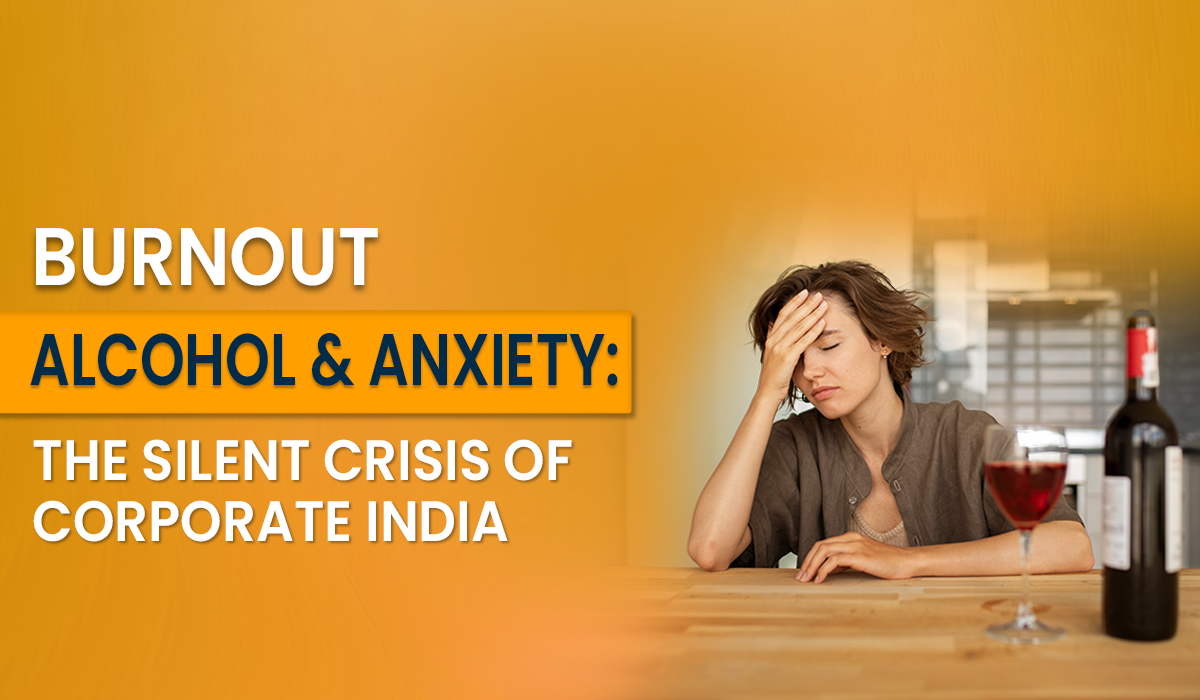
The Indian corporate world, which is very fast-paced, places great emphasis on targets and the career ladder, often at the expense of emotional well-being. However, lurking behind the smokescreens of quarterly reports and promotions, there is an unspoken epidemic rising; Beneath the Surface, Burnout, Alcohol, and Anxiety are creeping up silently among millions of professionals. What appears to be success externally is a complicated battle with the mind for many.
Experts argue that the white-collar population in India is experiencing burnout at an alarming rate due to long working hours, lack of job security, an always-on culture of digital society and stiff competition within industries like the IT industry, finance, consulting, and marketing. Burnout can be characterized by many employees feeling chronically exhausted, emotionally detached, and unable to perform their jobs as professionals do. In the long run, the strain tends to develop into anxiety, depression, or dependence on alcohol, which is not healthy.
Burnout: An Epidemic in the Workforce.
Burnout is not a simple exhaustion here and there. It is a chronic emotional state of mental exhaustion that compromises the functioning of a person not only at the workplace, but also in normal life. Burnout is a common problem in the Indian corporate environment, where 12-14 hour shifts are normalized, and people tend to ignore it until it turns into a severe mental health problem.
Stress becomes habitual when organizations demand that they remain responsive even during the time that they are not working. Such intensive pressure undermines motivation, sleep disturbance, and almost impossible mental disengagement. With the dwindling of emotional reserves, Burnout is a significant factor in the increasing Burnout, Alcohol,and Anxiety loop experienced by corporate workers.
Alcohol: A Typical, Hazardous Adaptive Process.
To most professionals, alcohol becomes a norm of dealing with stress and emotional overload:
- At networking events and client dinners, it is prevalent.
- At the end of a working day, a drink is a way to relax.
- There are those who consider alcohol a painkiller for fatigue induced by burnout.
Nevertheless, alcohol is a depressant of the central nervous system. This effect is temporary, as it might defuse tension or inhibit inhibition
Frequent or excessive drinking may aggravate anxiety and deepen the bad mood, and diminish the brain's coping capacity to stressful situations, making the relationship between Burnout, Alcohol, and Anxiety.
More specifically:
- The calming effect of alcohol disappears easily when metabolised.
- The anxiety usually has a backlash and starts developing restlessness and panic-like symptoms.
- It has long-term effects, which are risks of anxiety disorders, depression, and dependence.
It is hard to resist what seems to alleviate the situation at the time, but it reinforces the issue instead of resolving it.
Anxiety: The Unseen Effect.
The frequent center of these three is anxiety. The chronic burnout in the workplace contributes to the continuous anxiety, aggravation, sleeplessness and mind overload. When these symptoms are treated with alcohol, it becomes a vicious circle; alleviation is attained, but when the alcohol has subsided, even more anxiety sets in, and so to go.
Emotional regulation, focus, decision-making, and general well-being may be disrupted by this combination of work pressure-induced burnout, use of alcohol as a temporary solution and persistent anxiety.
Burnout, Alcohol, and Anxiety Intersection.
This cycle often unfolds as:
- Chronic burnout- exerted stress on the body over an extended period of time.
- Alcohol consumption as a coping mechanism - hides stress without solving the issue that causes it.
- Increase in anxiety - exacerbated by the impact of alcohol on the brain chemistry.
Instead of interrupting the cycle, alcohol tends to make the emotional stress escalate, the quality of sleep becomes worse, and the healthy coping mechanisms become postponed, particularly when alcohol is taken regularly to overcome stress and anxiety.
Breaking the silence: Awareness and Support.
The increased Burnout, Alcohol, and Anxiety crisis in corporate India cannot be addressed solely by the overlaying wellness programs. Experts stress the necessity to change the system, including:
- Mental health and stress open conversations.
- Trained leadership to recognize burnout and anxiety at its initial stages.
- Boundary and recovery time-respecting work policies.
- Professional counselling and therapy.
Working environments can become places of sustainable development when rest, emotional well-being, and mental healthcare are normalized rather than causes of burnout.
Need Support? Athena Luxus Is Here to Help a
If burnout, anxiety, or alcohol use is starting to affect your work, health, or personal life, you don’t have to deal with it alone. Early support can prevent long-term mental health challenges and help you regain balance.
Call Athena Luxus at +91 9718921212 today to speak with a trained mental health professional and take the first step toward clarity, balance, and recovery.