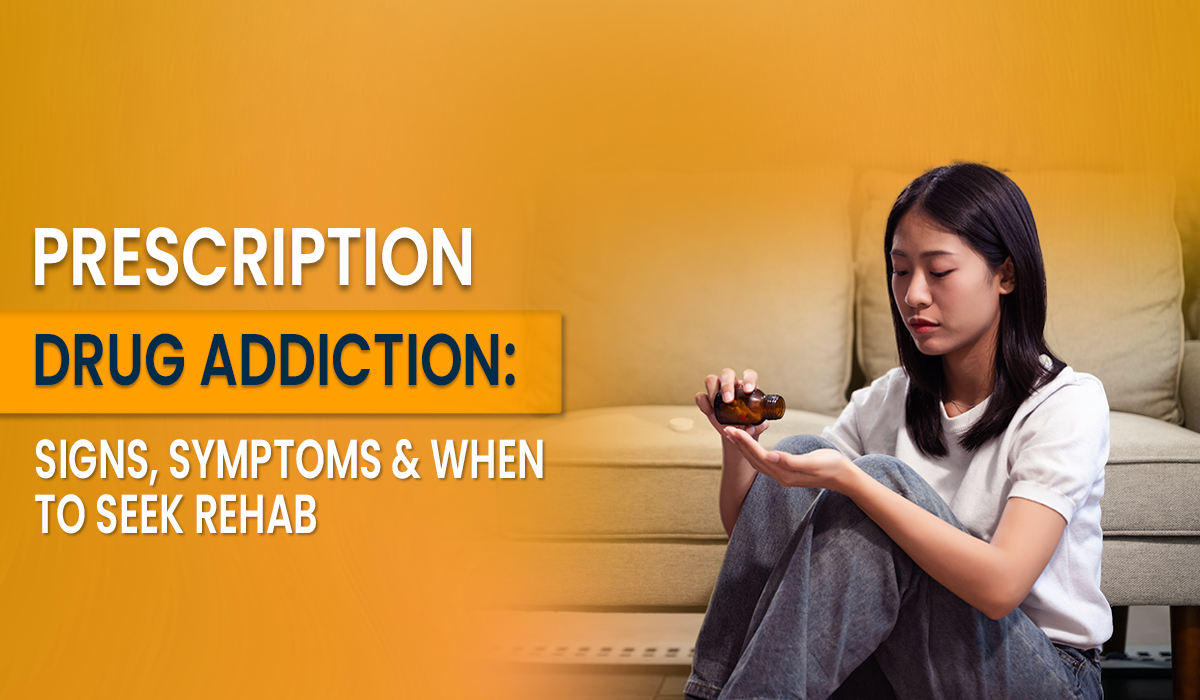
Prescription medicines are meant to heal. But when used beyond medical guidance, they can quietly turn into a serious dependency. Prescription drug addiction affects people across age groups, professions, and social backgrounds—often without immediate warning signs. Because these drugs are legally prescribed, many individuals and families fail to recognise the early red flags until the situation becomes critical.
Understanding prescription drug addiction symptoms, recognising behavioural changes, and knowing when to seek rehab can make a life-changing difference.
What Is Prescription Drug Addiction?
Prescription drug addiction is a condition where a person becomes physically or psychologically dependent on medications prescribed for pain, anxiety, sleep, or attention disorders. Over time, the body adapts to the drug, leading to tolerance, cravings, and loss of control over use.
Commonly misused prescription drugs include:
- Painkillers (opioids)
- Anti-anxiety medications (benzodiazepines)
- Sleeping pills
- Stimulants for focus or alertness
Addiction is not a lack of willpower. It is a medical condition that requires structured treatment and professional care.
Why Prescription Drug Addiction Often Goes Unnoticed
Unlike illicit substances, prescription drugs are associated with medical trust. This makes dependency harder to detect in its early stages.
Some common reasons addiction is missed:
- Medication was originally prescribed by a doctor
- Dosage increases gradually
- Symptoms are mistaken for stress or fatigue
- Family members may not suspect misuse
By the time physical or emotional symptoms become visible, dependency is often already established.
Prescription Drug Addiction Symptoms to Watch For
Recognising early symptoms of addiction to prescription drugs can help prevent long-term damage.
Physical Symptoms
- Needing higher doses for the same effect
- Withdrawal symptoms when doses are missed
- Frequent headaches, nausea, or dizziness
- Sleep disturbances or excessive drowsiness
- Slurred speech or poor coordination
Psychological Symptoms
- Strong cravings for the medication
- Anxiety or irritability without the drug
- Mood swings or emotional numbness
- Reduced motivation or mental clarity
- Depression or panic episodes
Behavioural Symptoms
- Taking medication without medical advice
- Doctor shopping or requesting early refills
- Hiding pills or lying about usage
- Decline in work or academic performance
- Withdrawing from family or social life
These signs of drug addiction to prescription drugs often appear together rather than in isolation.
Signs and Symptoms of Prescription Drug Addiction in Daily Life
Prescription drug addiction slowly alters everyday behaviour. Family members are often the first to notice subtle but consistent changes.
Key warning signs include:
- Increased secrecy around medication use
- Irritability when questioned about drugs
- Missed responsibilities or deadlines
- Financial strain due to medication misuse
- Emotional detachment or sudden anger
Ignoring these signs can lead to worsening dependency, overdose risk, and serious mental health complications.
Health Risks of Long-Term Prescription Drug Addiction
Without treatment, prescription drug addiction can affect nearly every system of the body.
Potential risks include:
- Liver and kidney damage
- Memory loss and cognitive decline
- Worsening anxiety or depression
- Increased risk of overdose
- Damage to relationships and career stability
Prolonged misuse also increases the risk of transitioning to stronger substances when prescription access becomes limited.
When Should You Seek Rehab for Prescription Drug Addiction?
Rehab is not a last resort—it is a preventive and restorative step. Early admission often leads to faster recovery and lower relapse risk.
You should consider rehab if:
- Attempts to stop using the drug have failed
- Withdrawal symptoms interfere with daily life
- Medication use is affecting mental health
- Relationships or work are suffering
- A doctor has raised concerns about misuse
Professional rehab provides medical supervision, therapy, and long-term relapse prevention—elements that home detox cannot offer safely.
How Prescription Drug Addiction Rehab Helps
Effective rehab addresses both physical dependency and psychological patterns behind addiction.
At a structured treatment centre, care typically includes:
- Medically supervised detox
- Psychiatric evaluation and medication management
- Individual therapy to address triggers
- Family counselling and education
- Relapse prevention planning
Recovery is not just about stopping the drug—it is about rebuilding stability, emotional regulation, and purpose.
Why Athena Luxus Is Trusted for Prescription Drug Addiction Treatment
Athena Luxus offers a discreet, evidence-based environment for individuals seeking recovery from prescription drug addiction. Treatment is personalised, confidential, and guided by experienced psychiatrists, psychologists, and addiction specialists.
What sets Athena Luxus apart:
- Low patient-to-staff ratio for focused care
- Medical detox under psychiatric supervision
- Integrated mental health and addiction treatment
- Private, calm, and secure healing environment
- Family involvement when appropriate
Our approach prioritises safety, dignity, and long-term recovery—not just symptom control.
Can Prescription Drug Addiction Be Treated Successfully?
Yes. With timely intervention and the right treatment plan, recovery is achievable. Many individuals return to productive, fulfilling lives after rehab.
Success depends on:
- Early identification of symptoms
- Professional medical support
- Consistent therapy and follow-up care
- Strong relapse prevention strategies
Seeking help is a sign of responsibility, not weakness.