
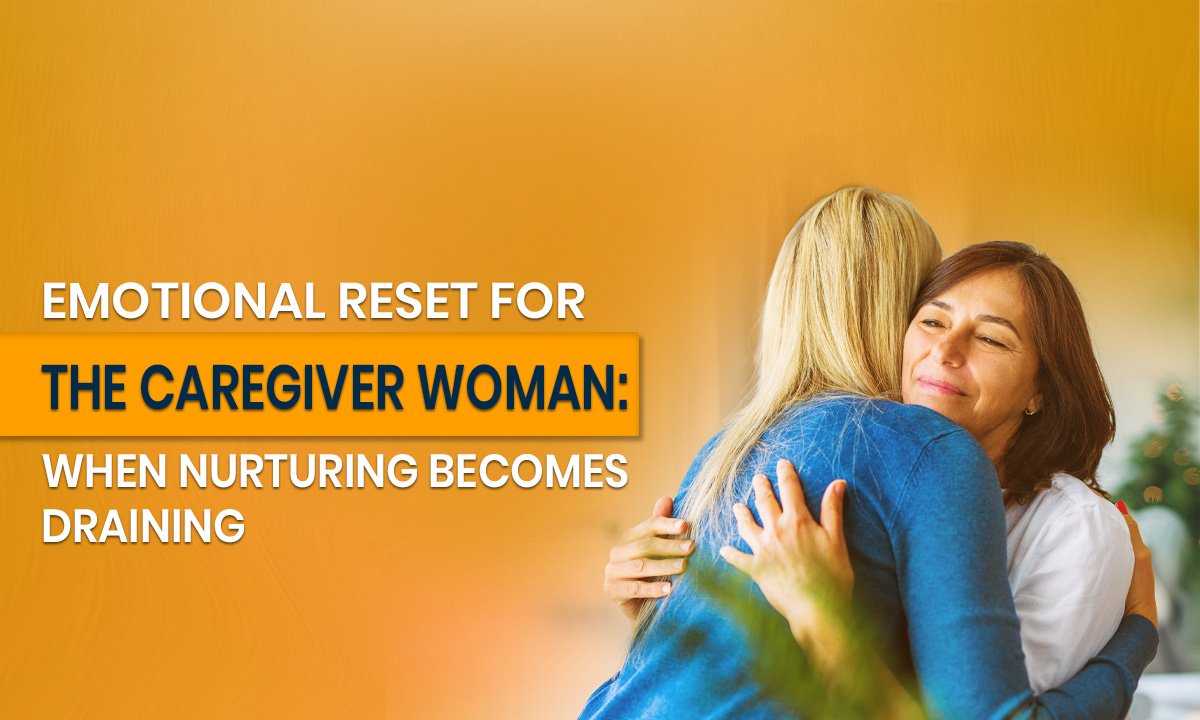
Sometimes taking care of people is said to be a loving thing to do, however, with time, it turns out to be an emotional burden to many women. You may be attending to the elderly, children with special needs, or family members who are ill, but all the time someone needs you and you may not realize it, having the responsibility all the time can burn your inner strength. In the long term, this burnout causes emotional re-balancing of caregivers as not only useful, but also necessary to survive and be healthy.
Caregiver women tend to put the needs of everyone first and put their emotional needs second. This disproportion eventually causes exhaustion, guilt and emotional numbness. The first thing to do in regaining your emotional balance is understanding why this occurs.
Why Caregiving Feels Emotionally Draining Over Time
There are seldom breaks, distinct boundaries or acknowledgment in care giving. Long-term stress is caused by the emotional work that is provided as needed, anticipation, crisis management, and inhibition of individual emotions. A lot of caregivers are on the alert system such that they never relax even when taking a rest.
This constant stress gradually destroys emotional strength. Lacking room to handle feelings, caregivers end up feeling overwhelmed, resentful or disconnected. At this point, emotional reset for caregivers needs to avoid further damages on an emotional and psychological level.
Signs You May Be Experiencing Caregiver Burnout
Caregiver burnout is one of the most neglected conditions of caregiver women. It is not something that comes out of the blue, it is something that becomes gradually. These symptoms are common; they are chronic fatigue, irritability, emotional numbness, frequent illness, and hopelessness.
Another symptom that you might experience is a lack of patience, social withdrawal, and even guilt in regard to your own needs. These symptoms are not indications of a weak person, they are the indications that your emotional stores are empty and require replenishment.
The Impact of Caregiving on Women’s Mental Health
Women's mental health is disproportionately affected by care giving; this is mainly because women are socially programmed that they should nurse without simulating. A lot of caregivers keep their feelings down in order to stay strong, thus they become more susceptible to anxiety, depression, and emotional fatigue.
Caregivers might feel invisible or unsupported when emotional needs remain unmet over a long period of time. This emotional disregard may augment stress reactions and the identity of the self. The awareness of this effect justifies the necessity of deliberate curing and emotional rehabilitation of the woman's mental health.
What an Emotional Reset Really Means for Caregivers
The emotional reset for caregivers does not mean that it is time to avoid obligations and forget about loved ones. It is re-setting your emotional compass in order to care for not all of who you are. Emotional reset involves getting rid of repressed emotions, reinventing boundaries, and resting without feeling guilty.
Contrary to brief breaks, emotional resetting has deliberate thought of emotion. It enables the caregivers to re-establish themselves and get back to their inner balance and resume care giving in a stronger position than the exhausted one.
Simple Emotional Reset Practices You Can Start Today
Emotional change can be achieved through small everyday habits. Being unemotional by recording your feelings aids in the unloading of stress. The latter are deep breathing or mindfulness exercises that manage your nervous system and ease the caregiver stress.
A second potent practice is to seek assistance without making an apology. Sharing work even in some cases provides some breathing room emotionally. Such straightforward measures, in the event they are followed, help maintain a continuous emotional re-tuning amongst the caregivers and avert emotional overload.
Ways to ease caregiver tiredness over time
Healing feelings takes time, yet small steps make space for steady care. Boundaries around emotions, moments just for yourself, plus talking in therapy or groups can ease the weight slowly. It does not finish in one moment - growth unfolds bit by bit, day after day.
Putting self-care first like sleep or water helps you in being free from caregiver fatigue. Over weeks, small consistent choices keep burnout at bay while making space for both helping others and staying whole.
You Are Allowed to Be Cared For Too
Most of the caregivers find it hard to deal with guilt when focusing on themselves. However, emotional replenishment lacks caring, and this results in resentment and withdrawal of emotions. The emotional reset enables the caregivers to be offered care in ways that are not shameful and justifiable.
You should be treated with compassion and rest and feel secure in your emotions as much as you should treat those who are important to you. Coming to terms with this is a very important process that will lead to healing and the ability to sustain emotions.
Conclusion
It is not in vain that you become a caring person, but looking after your emotional health is not worth it. Being able to notice the emotional exhaustion and being willing to make an emotional reset of caregivers can change the way you experience caregiving and life itself. By healing the heart of the caregivers do not leave their job like they empower it. Emotional restoration is not an egocentric choice, it is necessary. Healing begins when support shows up. Women who care for others often forget themselves. Athena Luxus steps in right there for the well being of women’s mental health under expertise of best professionals.