
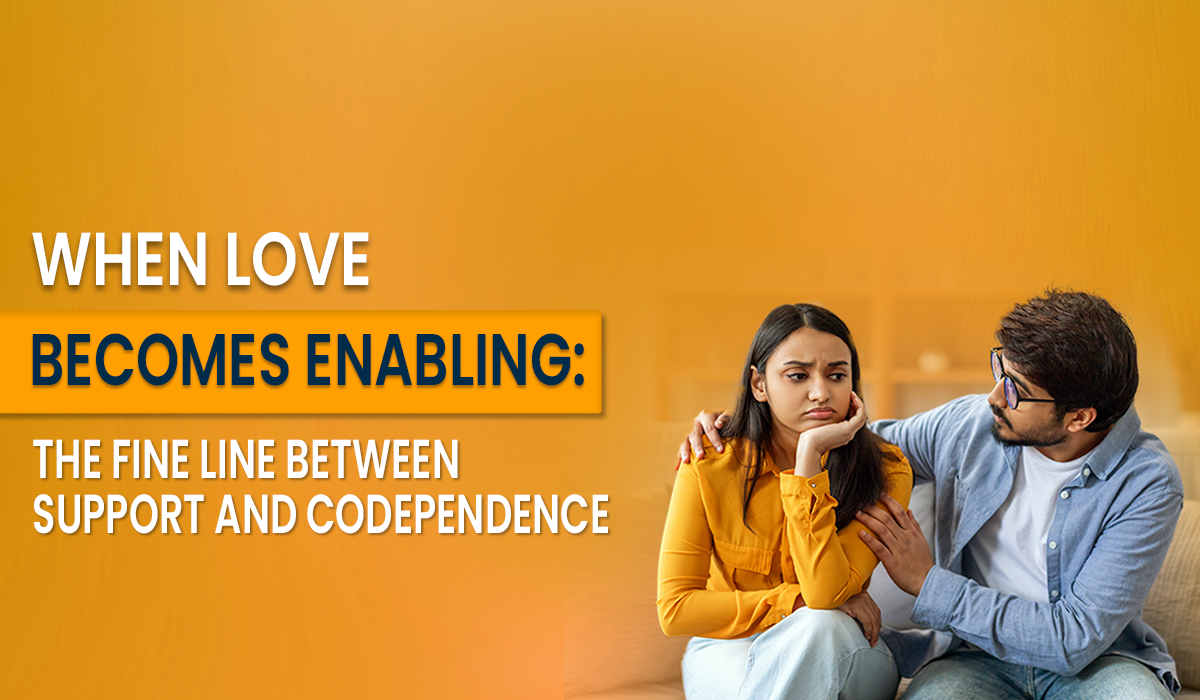
Love is meant to feel safe. Supportive. Steady.
However, occasionally, in the attempt to assist a person we care about, love can creepily turn into something else, leading to over-functioning and emotional burnout.
This is where codependency can be found. The aspect that gradually becomes established and accumulates in relationships where care becomes control, sacrifice replaces balance, and boundaries fade does not appear as a dramatic flaw, but rather as a pattern.
At Athena Luxus, individuals and couples are gently helped to recognize these patterns, rebuild healthy boundaries, and learn how to care without losing themselves, so love can return to feeling safe, mutual, and steady again.
What Is Codependency?
Codependency refers to the act of prioritizing the needs, temperaments, or issues of another person above your own to the extent that the appreciation of your value is followed by the perception that you are repairing, saving, or controlling their issues.
This is because in a codependent relationship, one party usually:
- Feels responsible for another adult’s emotions or choices
- Avoids conflict at all costs
- Struggles to say no
- Men are guilty of putting self first.
- Mistakes love sacrifice.
This isn’t about weakness. It normally originates in affection, devotion, and insecurity in losing touch.
Definition of Codependency in Relationships.
Codependency in relationships may be heard to sound like:
- “If I don’t handle this, everything will fall apart.”
- They require me--I cannot go or retreat
- When they do change, then I shall be fine.
The relationship becomes unbalanced with time. One person over-gives. The other is ineffectual. Both are paralyzed.
Love begins to be burdening rather than sustaining.
Codependency vs Support: What’s the Difference?
It is in this that most people are confused.
Support looks like:
- Encouraging responsibility
- Giving assistance but not dominating.
- Treating others with respect and even when you are in disagreement.
- Believing in their capacity to develop.
Codependency looks like:
- Resolving issues that are not yours.
- Shielding a person against repercussions.
- Control over their emotions, money, or substance.
- Having anxiety or a lack of security when you get off helping.
Support empowers. Even codependency is in control.
Codependency in Substance Use: Why It’s So Common
Codependency is a common occurrence in cases of addiction or substance use.
Loved ones may:
- Cover up drinking or drug use
- Excuse oneself in the workplace or family.
- Pay the debts, clean up messes, or lie to defend them.
- Stay silent to “keep the peace.”
This is loving like love, but it usually procrastinates healing.
Caregiver becomes emotionally exhausted, bitter, and unseen when the effects of the addictive behaviour are eliminated, and the addict has less incentive to change
Codependency and Boundary Setting: The Lost Piece.
Healthy relationships need boundaries, not ultimatums. Boundaries are not about punishment. They are about self-respect.
Examples of healthy boundaries include:
- “I won’t lie to cover for you.”
- I am able to endorse treatment, but not substance use.
- I like you, and I am not a verbal-abuse taker.
Boundaries can also seem selfish at first, especially when you have been programmed to put others first. It is the limits that make love something sustainable.
Codependency and Interdependence: What Is the Difference?
Several individuals are afraid of boundaries because they equate independence with distance.
Here’s the key difference:
Codependency
- “I need you to need me.”
- Only one of them is emotionally burnt.
- Identity is based on the relationship.
Interdependence
- Not to rely on one another but to choose one another.
- The two individuals make themselves responsible.
- Support flows both ways
Grasping each other is healthy intimacy, but not emotional merging together.
Patterns of Codependency unraveled.
Codependency does not manifest itself.
It often grows from:
- Childhood roles (the one who is the responsible one)
- Fear of abandonment
- Turbulent or dysfunctional relationships or trauma.
- Sacrifice and duty cultural conditioning.
Awareness is the first step. You need to be clear; you do not need to accuse yourself.
Ask yourself:
- Am I guilty when I sleep or say no?
- Am I nervous when I stop giving assistance?
- Would I be fearful of what I would have become without this role?
These are some of the questions that open the door to change.
Healing is not leaving: It’s establishing a Balance.
Codependency patterns do not necessarily need to be ended to be broken.
It involves altering your way of appearance.
Healing looks like:
- Habit is to let others to their own choices.
- Getting back your time, health, and identity.
- Requesting assistance rather than doing it on your own.
- Getting to know that love does not necessitate self-erasure.
Relationships are revived when support takes control over control, boundaries the guilt over boundaries. At Athena Luxus, individuals and families receive confidential, relationship-focused support to understand codependency, build healthier boundaries, and restore balance, without blame or judgment.