
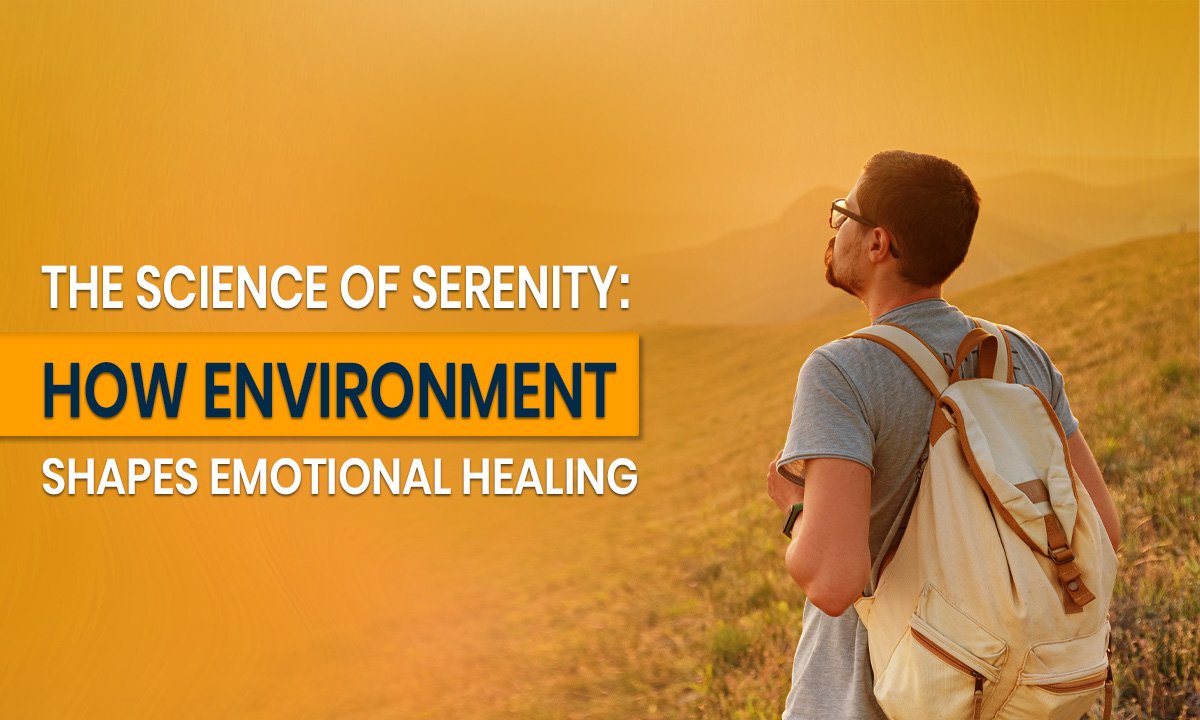
In the modern hyper stimulated world, emotional distress can seem as an inevitable thing. Everywhere, the digital noise, overcrowded city life, modern life does not leave the mind a chance to relax. This is where Serenity proves to be more than a feeling, it is a scientifically proven state of healing. Studies are becoming more and more convinced that the environment is a direct determinant of emotional recovery, psychological balance, and psychological resilience that remain resilient over time.
By knowing the impact of space, light, sound and design on the nervous system we can create conditions which ideally enhance healing instead of obstructing it. It is not that emotional restoration is accidental but it is heavily influenced by the environments we live in in our day to day lives.
What Is Serenity From a Psychological Perspective?
Psychologically, serenity is defined as a calm and controlled state of the mind with emotional reactions and stress reactions in balance. It relates to the activation of the parasympathetic nervous system, the rest and digest form of the body. When patients find themselves in this condition, they are better able to think and their emotional response is easier to handle.
Psychologists tend to tie Serenity to emotional control, the feeling of safety and lesser cortisol level. This condition enables people to process feelings without being overwhelmed, which is the basis of overcoming anxiety, trauma, and mood disorders.
The Science Behind Emotional Healing
Motivation Emotional healing is a neurobiological process. It entails rewiring of the stress responses, reconstruction of emotional safety and reinstatement of balance in the brain chemistry. Stress may cause the brain to remain in the state of survival mode thereby affecting emotional processing and decision making.
To support the rationale of providing favorable environments to facilitate timely emotional healing, neuroscience research indicates that hypervigilance can be decreased and neuroplasticity fostered by favorable environmental conditions. Fear fades when safety takes hold, then mental paths loosen up. Old reactions start to wear thin as new ways of handling stress take root instead. The mind shifts without force, simply because it feels safe enough to try.
How Environment Shapes Mood and Mind
Far apart in study, yet both fit numbers. Space does not shape the mind, still, each leaves traces on a scale.
These factors are lighting, noise, air quality and spatial layout that have direct influence on the mood, focus and emotional stability. The natural light is also very important in regulating circadian rhythms which plays a role in the maintenance of emotional balance.
The connection between the environment and mental health is particularly evident in the clinical facilities. It has been demonstrated that calm and well-designed environments can minimize anxiety, increase treatment results, and decrease recovery time. A minor change in the environment can lead to significant emotional change.
Healing Environments and the Psychology of Safety
A healing environment is a place that sends the message of safety to the nervous system. Emotional restoration takes place on the platform of safety. In its absence, the brain is on the defensive mode hence challenging to heal.
The development of effective healing environments is in a deliberate attempt to reduce sensory overload and increase the perception of control and comfort. Such aspects as soft textures, familiar patterns, and connection with the natural environment inform the brain of comfort, which enables emotional defenses to drop down naturally.
What Makes a Therapeutic Environment Truly Effective?
A really therapeutic setting is more than an aesthetic one. It incorporates the psychological principles with the sense design in an effort to assist mental regulation. This will involve equal lighting, acoustic insulation, relaxing color schemes, and chair movement that ensures tension is lessened.
The therapeutic environment should be constructed well to treat personal boundaries and autonomy. Individuals will experience reduced stress responses when they perceive that they have control over their space and will experience safer and more effective emotional processing.
Serenity as a Foundation for Emotional Well-Being
It is not the suppression but regulation that leads to emotional stability. Serenity offers the mental factors that are needed in reflection, strength, and restoration. With a calm state of the nervous system, there is the enhancement of emotional clarity and reactions become more deliberate.
Long-term Emotional Well being relies on habitual exposure to environments that offer psychological and emotional security. In this case, emotional exhaustion and burnout are more probable in the absence of these conditions despite the presence of high coping skills.
Everyday Environments That Support Emotional Healing
Clinical and retreat-based spaces are not the only ones where healing takes place. The daily settings such as families, offices, and the community are very strong factors when it comes to emotional well-being. Even simple changes in the environment can go a long way in minimizing stress on a daily basis.
Serenity can be achieved through simple things like clean surroundings, natural air flow, silent retreats, and conscious lighting that will not necessitate significant lifestyle adjustments. The point is never to be perfect, but to be emotionally compatible with the environment.
Simple Ways to Create Serenity in Daily Life
- Bring about some natural things like plants or day light.
- Use as slow background noise as possible.
- The warm and neutral colors should be used to reduce visual stress.
- Establish specific relaxed areas that are not distracted digitally.
- Always have routines that are regular in the spaces that are known.
These minute variations aid the nervous system to be under control during the day.
Why Modern Life Disrupts Serenity—and How to Reclaim It
Modernity values speed, productivity and round-the-clock connectivity- usually at the expense of emotional equilibrium. The brain is in constant stimulation and thus it is in an increased state of alertness so that one may find it hard to relax.
To restore Serenity, boundaries with technology have to be deliberate, spaces have to be carefully planned, and one needs to decelerate itself. Even a few instances of environmental balance may disrupt the loops of stress and regain emotional balance.
The Future of Mental Health Design and Healing Spaces
The design of mental health is changing the sterile, clinical designs to human-centered and emotionally responsive designs. The neuroscience, architectural, and psychological approach will combine into the future healing environment to provide emotional recovery on all levels.
Some of these innovations are biophilic design, responsive lighting systems and dynamically responsive spaces to emotional needs. As knowledge will increase, Serenity will be a quantifiable design result and not an ideation.
Conclusion: Serenity Is Designed, Not Discovered
Healing is not an individual process. It is played in a setting that favors or is hostile towards emotional balance. We do not come across serenity, we design and make it through careful thought, awareness and careful care.
When spaces are espoused to human emotional requirements, healing would be more easy, sustainable, and deep. We at Athena Luxus establish the foundation of emotional health through the creation of environments that relax the mind and ensure safety of the emotions. Connect us now for lasting emotional health of your closed ones.